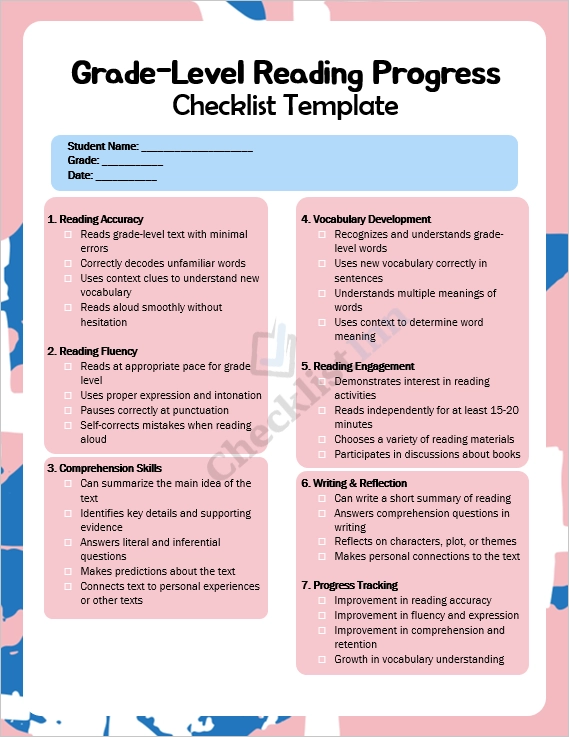
Unlock a proven, ready-to-use reading assessment tool for your classroom!
This Grade-Level Reading Progress Checklist is a comprehensive, teacher-friendly resource designed to help you track and support students' reading development throughout the school year. Whether you're working in a small group, conducting one-on-one conferences, or monitoring whole-class progress, this checklist provides structure, clarity, and actionable insights.
A fully-formatted PDF checklist, organized by key reading domains: accuracy, fluency, comprehension, vocabulary, engagement, writing, and progress tracking.
Editable version (e.g., Word or Google Doc) so you can tailor the checklist to your grade-level standards or school curriculum.
Teacher notes section for observations, reflections, and goal setting.
Suggestions for how to use the checklist in weekly/termly assessments.
Data-Driven Instruction: Use the checkboxes to make observable, measurable notes on student reading behaviors — perfect for identifying strengths and areas for growth.
Student Growth Tracking: Document progress over time. Revisit the checklist periodically to monitor improvement in fluency, comprehension, and more.
Individualized Support: Use the information to guide differentiated instruction, small-group work, or targeted interventions.
Parent Communication: Share meaningful feedback with parents — illustrate student progress and collaboratively set reading goals.
Time-Saving & Organized: No need to build your own tracking tool from scratch — this checklist is structured, ready-to-go, and easy to use.
Print or Project: Use a printed copy during reading conferences or project it on a screen while students read aloud.
Use Regularly: At least once every few weeks, mark the checklist and note observable behaviors.
Reflect & Set Goals: In the teacher notes section, write down insights and action steps (e.g., “focus on expression for …”, “teach context-clue strategies”).
Share & Collaborate: Use the editable version to adapt the checklist to your school's reading benchmarks or to share with co-teachers.
Review Over Time: Revisit earlier checklists to compare how a student has progressed — this visual data can help in parent-teacher meetings or progress reports.
Evidence-Based: Aligns with common reading assessment practices in modern literacy instruction.
Flexible: Works for any grade level, from early readers to more advanced students.
Cost-Effective: Pay once, and use it year after year for multiple students.
Teacher-Centered: Designed with practical usability in mind — easy to complete, and even easier to interpret.
← Previous Article
Reading Speed Tracking ChecklistNext Article →
Story Retelling Checklist